

Why Do Whales Breach? The Science Behind the Leap
There's nothing quite like watching a 40 tonne humpback whale launch itself clear out of the ocean and crash back down in an explosion of white water. It's one of the most thrilling sights in nature, and one of the most mysterious. Scientists have spent decades studying this behaviour, and while there's still no single confirmed answer, several well supported theories explain why whales breach. On Perth's coastline, we get a front row seat to watch it happen and, hopefully, understand it a little better.
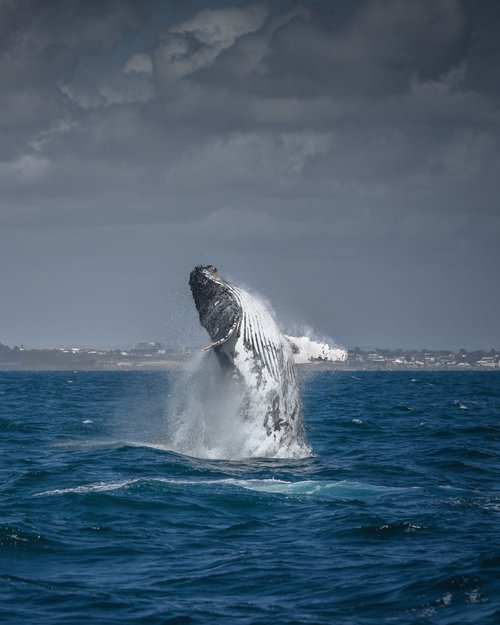
What Exactly Is a Breach?
A breach is defined as any leap in which a whale clears at least 40 percent of its body from the water. To achieve this, a humpback whale needs to accelerate to speeds of around 30 kilometres per hour before launching upward. The energy required is enormous, which is exactly why scientists believe breaching must serve an important purpose. An animal that size doesn't burn calories on a whim.
Removing Parasites and Irritants
Whales can carry hundreds of kilograms of barnacles, whale lice, and other hitchhikers on their skin. The sheer force of a breach, and the impact of hitting the water afterward, may help dislodge some of these unwelcome passengers. It's a bit like a full body scratch, just on a much grander scale. Some researchers have even observed spikes in breaching activity among whales carrying heavier parasite loads.
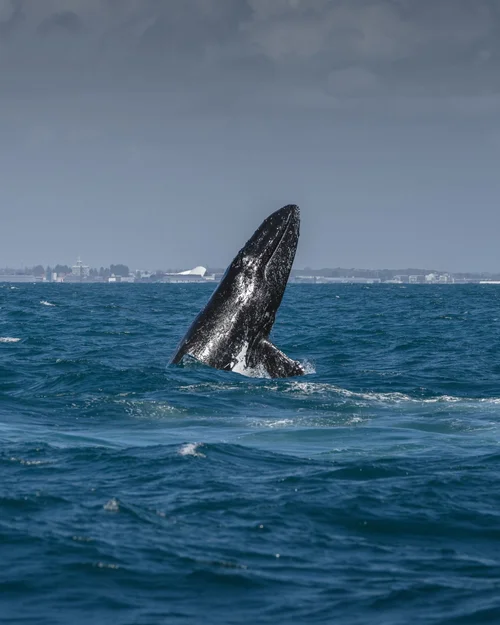
Communication Across the Ocean
Sound travels remarkably well underwater, and a breach creates an almighty splash that can be heard for several kilometres, far beyond the range of a whale's usual vocalisations. Many researchers believe whales breach to send a message, announcing their presence, location, or mood to other whales in the area. In busy migration corridors like the one along the WA coast, this kind of long distance signalling may help whales keep track of one another during their long journey north and south each year.
Courtship and Competition
During breeding season, breaching may serve as a display of strength and fitness. A powerful, repeated breach takes enormous energy, and showing off that energy could be a way for males to impress potential mates or assert dominance over rival suitors. It's no coincidence that breaching activity often peaks when whales gather in warmer waters, such as those off Western Australia, to breed and raise their young.
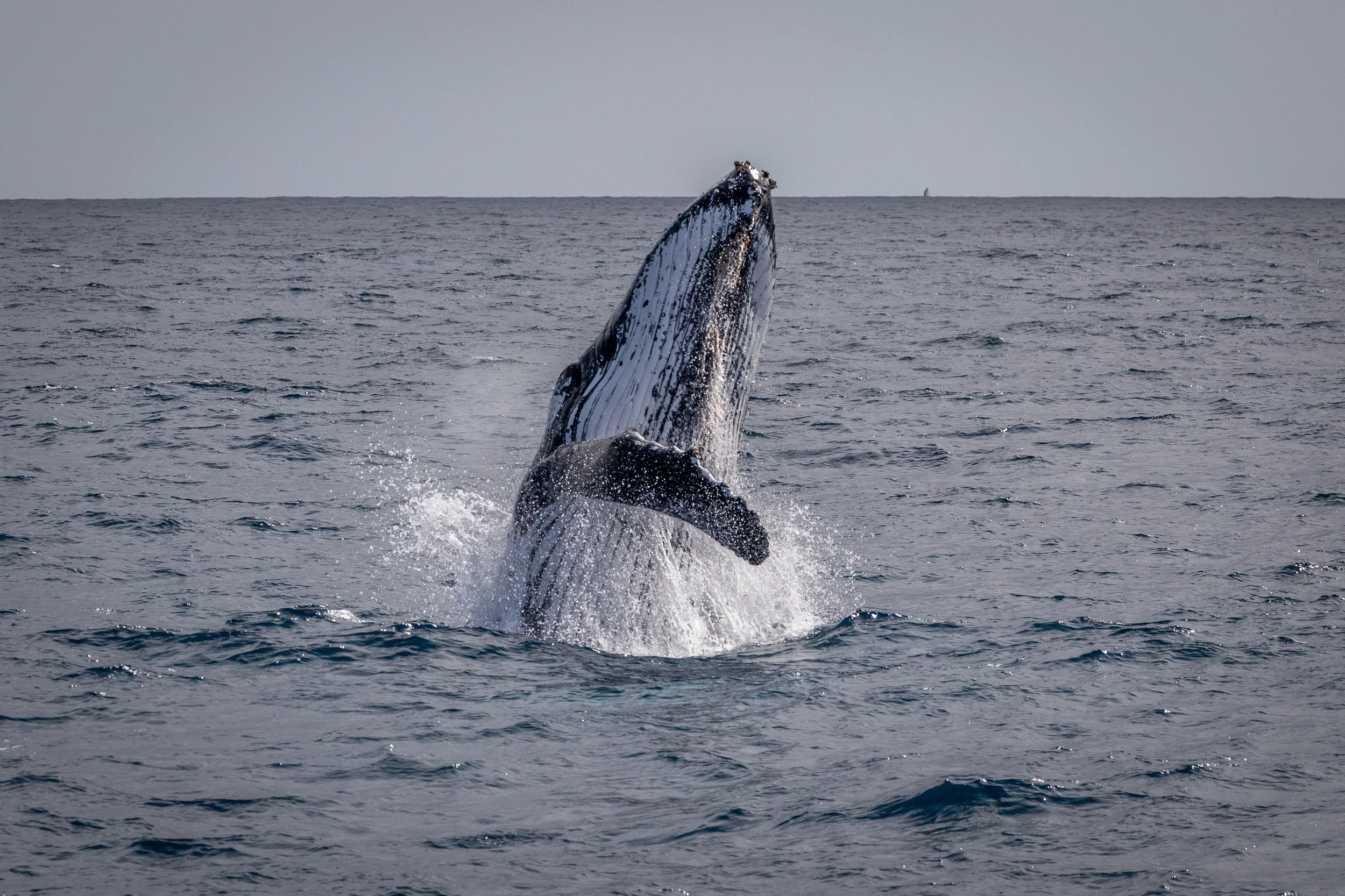
Play, Practice, and Pure Exuberance
Not every breach needs a serious explanation. Young calves in particular seem to breach simply for the fun of it, practising the movement and building strength while they play in the safety of sheltered bays. Watching a calf attempt clumsy, half finished breaches beside its mother is one of the most joyful sights in whale watching.
Breaching vs. Other Surface Behaviours
Humpback whales are by far the most enthusiastic breachers of all whale species, which is one of the reasons they're such a popular species to watch along the WA coast. Southern right whales and sperm whales are also known to breach on occasion, though far less frequently. Curious how different species behave and where to find them? Our guide to the whale species you can spot in Australia covers this in more detail.
When and Where to See Breaching Near Perth
Humpback whales migrate along the Western Australian coastline from May to November, travelling north to breed in warmer waters and then south again toward Antarctica with their new calves in tow. Breaching is common on the southern leg where energetic calves test out their new skills close to shore.
See It for Yourself
No documentary or photo can quite capture the scale and power of a breaching humpback in person. Join us for an eco friendly, expertly guided tour along Perth's coastline.