

The Science of Whale Watching: Understanding Whale Behaviour and Communication
Whale watching is a mesmerising activity for nature enthusiasts, offering a glimpse into the majestic world of these giant marine mammals. To truly appreciate the experience and understand what you're observing, it's helpful to know some basics about whale behaviour and communication.
Understanding Whale Behaviour
Whales are known for their complex behaviours, which can be broadly classified into a few categories:
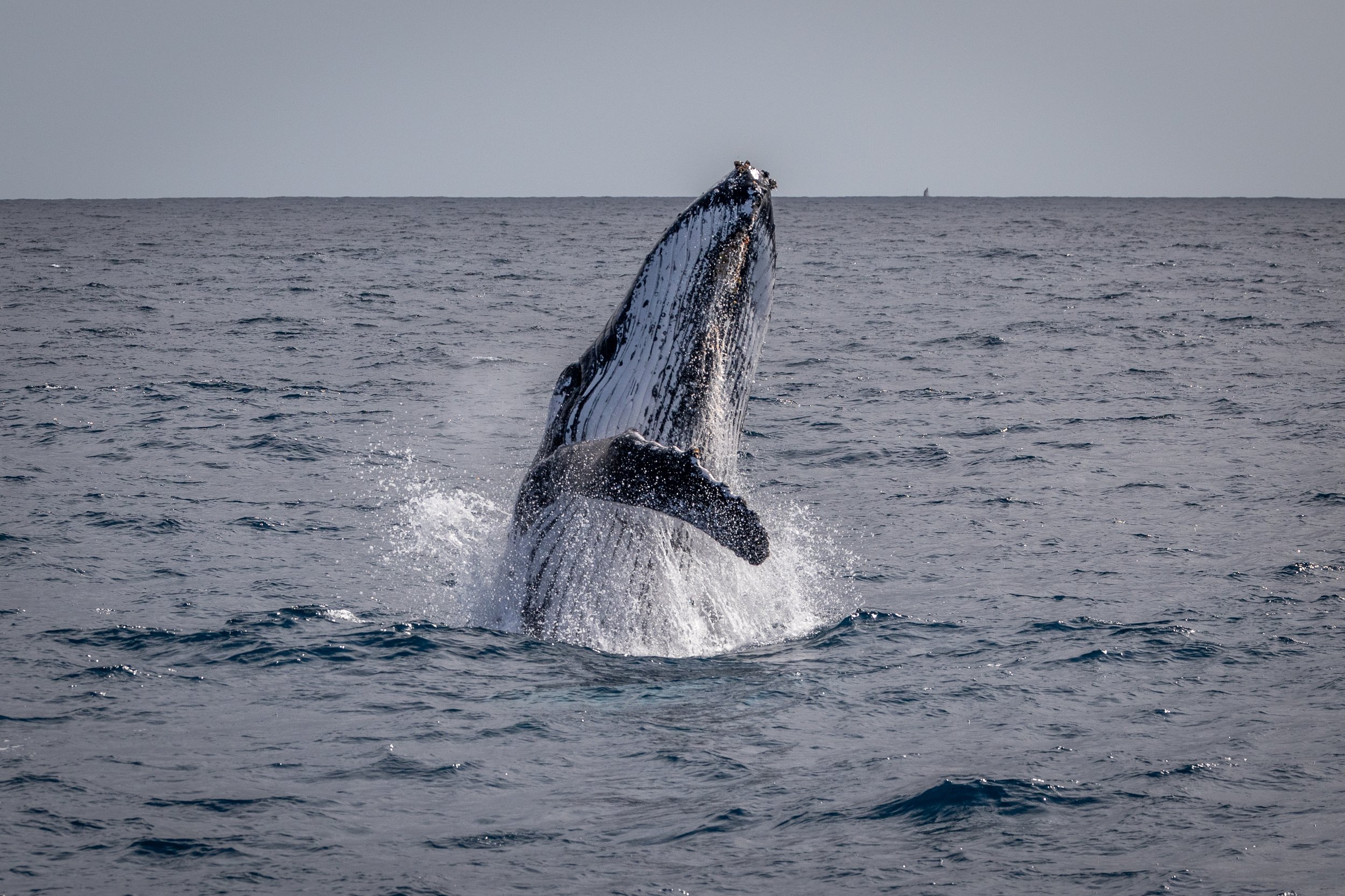
Breaching: This is one of the most spectacular whale behaviours to witness. A whale propels its body out of the water and lands back with a huge splash. Scientists believe breaching may serve multiple purposes, including cleaning parasites off the body, communication or as a display of strength.
Spyhopping: When whales spyhop, they vertically poke their heads out of the water to observe their surroundings above the surface. This behaviour helps them to see objects or activities near the water's surface, including boats and human activity.
Lobtailing and Fluking: Lobtailing occurs when a whale lifts its tail out of the water and then slaps it on the water surface, which can be heard over long distances underwater. Similarly, fluking involves a whale raising its tail before diving deep into the water. These actions are thought to communicate with other whales or to stun prey.
More Whale Behaviours to Look Out For
Beyond the three classic behaviours above, keep an eye out for these on your next whale watching tour:
Pectoral Fin Slapping: Whales slap their long pectoral fins against the water's surface, often repeatedly. It's thought to be a form of communication as well as a way to dislodge parasites, and is especially common in playful or socialising humpbacks.
Bubble-Net Feeding: A remarkable cooperative behaviour where whales release rings of bubbles to corral schools of fish before lunging up through the middle with mouths open. It's more commonly seen in feeding grounds than migratory waters, but is a fascinating example of coordinated whale behaviour.
Logging: Whales sometimes rest motionless at the surface, resembling a floating log. This is a low-energy behaviour associated with rest rather than communication or feeding.
Tail and Fin Waving: Occasionally a whale will wave a pectoral fin or fluke slowly in the air, which some researchers believe may be a form of visual signalling to other whales or even to nearby boats.
Why Do Whales Display These Behaviours?
Whale behaviours generally fall into a few broad purposes: communication (signalling to other whales across distance), feeding (herding or stunning prey), maintenance (removing parasites or shedding skin), and social or play behaviour (particularly among juveniles and mother-calf pairs). Often a single behaviour, like breaching, can serve more than one of these purposes at once, which is part of why whale behaviour remains such an active area of scientific research.
Whale Communication
Whales are also famous for their vocalisations, which are as varied as their behaviours. Whale sounds include clicks, whistles and prolonged songs that can last up to 20 minutes. These sounds serve different purposes:
Clicks: Mainly used for echolocation to find prey in the deep ocean.
Whistles and Calls: Used for social communication among whales in a pod.
Songs: These are complex sequences of moans, howls and cries, believed to be used by males to attract mates or to assert dominance over other males. Humpback whales produce distinct songs and melodies to communicate within their pods and to other whales at great distances. Each song can last from 20 to 30 minutes, but humpbacks are known to sing continuously for hours. Depending on the frequency of the song, these sounds can travel hundreds of kilometres underwater.
How Do Whales Communicate? The Science Explained
So how do whales actually produce and receive these sounds underwater? Unlike humans, whales don't have vocal cords in the way we do. Baleen whales, like humpbacks, are believed to generate sound by moving air through structures in their laryngeal region, while toothed whales (such as sperm whales and orcas) produce clicks and calls using specialised structures near their blowhole, often called "phonic lips."
A few things that make whale communication so effective across the vast ocean:
Low-frequency sound travels further. Many whale calls sit at frequencies too low for the human ear, and low-frequency sound loses less energy as it travels, allowing some calls to be detected hundreds of kilometres away.
Water carries sound faster and further than air. Sound travels roughly four times faster in water than in air, and with far less loss of intensity, which is part of why whale communication can span such enormous distances.
Whales listen as well as they "speak." Whales have specialised hearing adapted to underwater acoustics, allowing them to detect the direction, distance and even the identity of another whale's call.
Sound is layered with meaning. Researchers believe that pitch, repetition, rhythm and even regional "accents" in a pod's calls all carry information, much like tone and inflection do in human speech.
The Purpose Behind Whale Songs and Calls
Whale communication isn't just about a single "message" - it likely serves multiple functions depending on the species, sex and situation:
Mating and reproduction: Male humpback songs are thought to play a role in attracting mates and may also signal a male's fitness to other males.
Navigation and orientation: Some calls may help whales navigate and maintain contact with their pod, particularly during long migrations like the one that brings humpbacks past the Western Australian coast each year.
Social bonding: Whistles and calls help mothers stay in contact with calves and allow pod members to coordinate movement and behaviour.
Cultural transmission: Perhaps most remarkably, humpback whale songs are known to evolve over time and spread between populations across entire ocean basins, a form of cultural learning that's rare in the animal kingdom.
Tips for Whale Watchers
Here are a few tips to enhance your whale watching experience:

Be Patient: Whale watching can involve a lot of waiting as these creatures spend the majority of their time underwater.
Use Binoculars: To get a good view of distant whale behaviours without disturbing them, always carry a sturdy pair of binoculars.
Listen: If on a guided tour, you might have the opportunity to use hydrophones to hear whale sounds.
Respect Their Space: Always maintain a respectful distance to avoid stressing the whales.
By understanding these behaviours and communication methods, enthusiasts can gain a deeper appreciation of whales and their complex world. Each whale watching trip can become a learning experience, providing insights into the lives of these fascinating marine giants. Enjoy your adventure responsibly and cherish the incredible sights and sounds that nature offers!